Wednesday, 28 February 2018

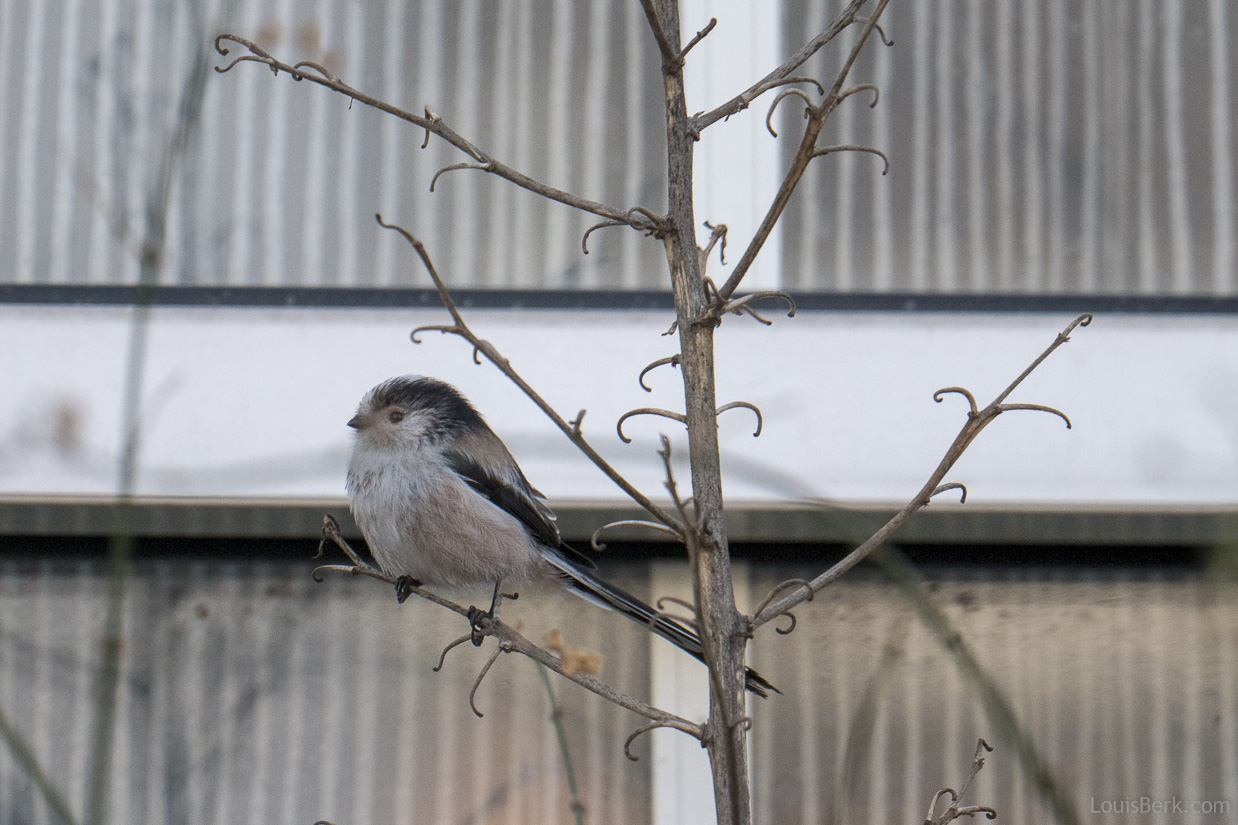
Long Tailed Tit Through The Window


A garden favourite of many twitchers, over the last few days a small flock of Long Tailed Tits have been perching outside our front window and sometimes appear to be looking in. It is most curious behaviour and my wife and I were at a loss to understand what was happening.


Photographing birds through a window is not the best way to capture them but I have also found it very hard to photograph these lovely, tiny animals so I took advantage of the opportunity. Their face to me is doll-like and resembles a mouse. In fact, the original name for this family of birds is 'Titmouse' and you can see why. They only weigh somewhere between 7-9g making them one of the smallest birds in the UK.

My wife, Julie - (playing Michaela Strachan to my Chris Packham!) - did some online research and  the activity of looking into windows has been observed elsewhere. The best explanation is that it is the mating season and the birds are reacting to their reflection and assuming it is a rival bird they need to see off.


There is one major advantage to the attraction of our windows. I have been trying to photograph these birds for some time. They have been rare in my garden for some years so when this flock arrived I was keen to get a good photograph. Knowing that they are regularly visiting my front garden allowed me to position myself and wait. As the photograph above shows, I was well rewarded for my patience.


These birds are sometimes described as a 'tiny ball of fluff' and they are very active. This makes them hard to photograph. In this case I am using a Panasonic G9 and the Lumix Leica 200/2.8 with the 1.4 teleconverter. In RAW mode the camera has a high speed capture mode of 20fps. My only issue was keeping the shutter speed up to a high level without compromising the image quality with too high an iso setting.

Their plumage is subtly coloured in greys, browns and blacks - and although not as colourful as Blue Tits or Great Tits they are still a very attractive bird to my eyes.


The bird is perching on a jasmine branch which is very slender - however it is not bending at all given its tiny weight. They have quite a loud high pitched voice when they call to each other.


In this pose you can see clearly the white central stripe on the head of the bird.


Hanging around outside our front window. My cats like to sit on a table on the other side and to say the least they also enjoy seeing these visitors!

Monday, 19 February 2018

Early Morning Gull


I live near the Regent's Canal so there are a lot of gulls constantly whirling around in the skies above me when I photograph. I was out just before dawn the other day and noticed how the rising sun reflected off the white plumage of these birds giving them a reddish glow.

Friday, 16 February 2018

Beautiful Eurasian Jay

I captured this photograph in nice almost-spring afternoon sunlight today which was dappling our apple tree. We have a pair of Eurasian Jays who inhabit some tall trees in ground to the rear of our garden. We put out peanuts for them and they regularly swoop down to take them. They are reasonably common birds of the Corvid family but to my mind much more attractive than Rooks and Crows. Despite being a large bird I find them to be quite shy. That this one exposed him/herself long enough for me to photograph was unusual. Normally they will hide themselves in branches.
Shot with my Panasonic G9 and Lumix Leica 200/2.8 lens I think the subtle colouration of the breast feathers, the speckled head and blue-checker flash on the wings have come out well, in my opinion.

Wednesday, 14 February 2018

Our take away section

Even though we have a perfectly good sunflower seed feeder, this Great Tit returned several times to feast on a sunflower head. My wife informed me that she grew it last year from a packet of free seeds.


Wednesday, 7 February 2018

Nuthatch spotting on Hampstead Heath

The Nuthatch is a small agile and common bird,
but also one which is hard to photograph.
Panasonic G9, Lumix Leica Elmarit 200/2.8
Despite this blog being about my back garden I do occasionally get out to other places to watch and photograph birds, most recently on Hampstead Heath.

One bird which caught my attention on a visit to Hampstead Heath a week ago was a Nuthatch. This is a tiny bird, about the size of a sparrow, but much more streamlined and with beautiful blue coat and light brown chest. I had never seen one in the wild before that time and today, when I returned to the heath, I was determined to see and photograph one. I was not expecting what turned out to be assistance in my quest.

I'd been told that nuthatches convene near the 'Bird Bridge' in the centre of the heath and I headed towards it. I was lucky to arrive at the same time as a regular visitor: a woman who comes most days and feeds the birds at the bridge. She must be recognised because even before she appeared the bird activity increased and I suddenly saw multiple Robins, Coal Tits, Great Tits and... what I was waiting for... a Nuthatch!


The reason for the sudden convening of these birds appeared, a small woman dispensing nuts and porridge oats. When I talked to her she said she has been doing this for nearly 30 years, on and off. She is adept at getting the nuthatches to catch the peanuts in mid-flight - although I found this impossible to photograph!

Nuthatch anticipating the peanuts and porridge
that will be coming its way.
Thanks to her efforts I was able to capture a classic nuthatch photo, with a peanut in its long beak.

Nuthatch with peanut: quite possibly my best bird photograph of the year, to date.
She told me that the other birds take the peanuts and eat them, but nuthatches tend to hide the treats for a later feast.

'Take-away', the Nuthatches prefer to hide the peanuts to eat later on rather than consume them immediately.
Other birds are also attracted to the free lunch that is dispensed. In this case a tiny Coal Tit. They find it hard to fly with the peanut and try to eat it on the ground.

A tiny Coal Tit is attracted to the peanut but finds it hard to fly with it.


In this particular case the bird was frightened away by an altogether more sinister visitor which was also attracted to the food.


A rat also on the prowl for some food.
In the end though, the star of the morning for me was being able to observe and photograph Nuthatches. Brightly coloured, excellent tree climbers, careful and intelligent about their food, they certainly made my trek across Hampstead Heath worthwhile today. I went home satisfied that I have captured some great moments with them - thanks to the 'Nuthatch' lady.

Agile and colourful, especially at negotiating tree with their long claws.
Copyright LouisBerk.com 2018, no unauthorised reproduction.


Thursday, 1 February 2018

Snow and a Great Spotted Woodpecker

London rarely gets snow - the last time we were 'snowed in' was back in 2009. We've had smatterings ever since and of course each time it snows for longer than five minutes the entire transport system collapses. Back in December it snowed for one day and everyone thought we were in for a white Chritsmas. It was all gone by the next morning. Still, an urban garden birder must seize the opportunity and I did my usual stint of back yard bird photography at the height of the blizzard. I was amply rewarded by this Great Spotted Woodpecker which appeared out of nowhere and alighted on the apple tree..

Unfortunately, it would not turn round and face the camera but I got a nice back shot of it glancing over his shoulder at me. This was a rare sighting for me. I have only seen a woodpecker in my garden twice before in over 10 years. I hope in the spring perhaps the bird will appear again and more regularly.

Wednesday, 31 January 2018

A Lone Sparrow Tale

Last Monday my wife decided to defrost the freezer. Out of it came a lone bagel which she hung on the tree - a convenient branch stub and the hole made it possible.


Before long the brightly coloured bread doughnut attracted a flock of starlings which convene regularly on our apple tree. Their normal fare is to feast on our fat-filled coconut halves and sunflower feeder.

From a distance they are ugly looking brutes but close up you have to admire their speckled plumage.

But the title of this story indicates that the central subject is not the starling but the humble house sparrow.

And I mean humble in its truest sense because the sparrow population of London appears to have been decimated in recent years. So much so, that when I see one in my back garden it is highlight of my daily bird spotting.

So it was that as I was photographing the tree and the bagel a lone sparrow popped into the frame, also attracted to this treat.

Here is the little fella pecking away at the exposed soft interior of the bagel. He was a lithe one. Not the fat fluffy ones that you sometimes see.

And he was all alone. The days of flocks of noisy sparrows, in my part of London at least, are long gone.

The question is: what has happened to them? Has their habitat been eroded? Is it the appearance of a larger bird or predator which caused the population to drop? Has our eco-system changed so dramatically that the numbers of these birds has been radically reduced?

The house sparrow population of the UK declined by 60% between 1994 and 2004 (RSPB), and I have little visual evidence in London of seeing any improvement from this disastrous state of affairs.

So I was very pleased and surprised to see this sparrow enjoying our bagel.  That is until this aggressive starling turned up also intent on feasting on the same item.

I only realised the extent of the aggression by the starling when I processed the photograph. It is clearly attacking the sparrow. It looks quite alarming in this photograph.


In fact, he seemed to end up grabbing the sparrow's hair.

The sparrow beat a hasty retreat to the sunflower feeder. Clearly, sparrows are made of sterner stuff because as soon as the starling lost interest, it was back on the bagel again.
Although it would seem that no harm was done, perhaps this is indicative of the behaviour by other birds which has helped to wear down the numbers of this species. It is hard to imagine this would have happened if the sparrow was protected by a flock but as I only ever see individual ones they are at the mercy of their solitary lives.

All's well that ends well, and after a bit more feasting the Sparrow exited stage right for another perch elsewhere.


All photographs Copyright LouisBerk.com 2018 - No unauthorised reproduction

Tuesday, 30 January 2018


"Occupied!"


My garden in north London is home to an increasingly large variety of birds, and other wildlife. One of the regular flocks that appreciate the catering I provide are Goldfinches. At times I have seen five of these highly decorated birds feeding on sunflowers and nyjer seeds. They are quite fearless - perhaps because of their numbers - and territorial, even amongst themselves.

Balletic Long Tail Tits

In Flight - Long Tailed Tit This spring has been characterised for me by the appearance of Long Tailed Tits in the front garden. They...